Hurricane season
Hurricanes have a season, like strawberries and football. In the Atlantic it runs from June to November, with a big peak in September.
The Atlantic season
The Atlantic hurricane season runs from 1 June to 30 November. National Hurricane Center: Tropical cyclone climatology Ninety-seven per cent of Atlantic tropical cyclone activity happens between 1 June and 30 November. NOAA Ocean Service: Hurricane or typhoon?
- Jan
- Feb
- Mar
- Apr
- May
- Jun
- Jul
- Aug
- Sep
- Oct
- Nov
- Dec
The peak of the Atlantic season is 10 September, with most activity between mid-August and mid-October. National Hurricane Center: Tropical cyclone climatology
In the Atlantic, the first named storm typically forms in mid to late June, the first hurricane in early to mid August, and the first major hurricane in late August or early September. National Hurricane Center: Tropical cyclone climatology On average (1991–2020), the Atlantic’s first named storm has formed by 20 June, its first hurricane by 11 August and its first major hurricane by 1 September. National Hurricane Center: Tropical cyclone climatology · checked 31 Oct 2026
Hurricanes can, and have, happened outside the official season. NOAA Ocean Service: What is a hurricane?
How many in a year?
An average Atlantic season (1991–2020) has 14 named storms, 7 hurricanes and 3 major hurricanes. National Hurricane Center: Tropical cyclone climatology · checked 31 Oct 2026
2005 was an unusually busy Atlantic season: 27 named storms, including 15 hurricanes. NOAA JetStream: Tropical cyclone introduction
Only since satellite pictures arrived in the 1960s have we been able to count, track and watch these storms properly across the oceans. NOAA JetStream: Tropical cyclone introduction
The Pacific
The eastern Pacific hurricane season runs from 15 May to 30 November. National Hurricane Center: Tropical cyclone climatology An average eastern Pacific season (1991–2020) has 15 named storms, 8 hurricanes and 4 major hurricanes. National Hurricane Center: Tropical cyclone climatology · checked 31 Oct 2026
In the north-west Pacific, tropical cyclones happen all year round; the main season is July to November. Met Office: Location of tropical cyclones
Around the world
There are seven regions (basins) around the world where tropical cyclones are likely to form. NOAA JetStream: Tropical cyclone introduction
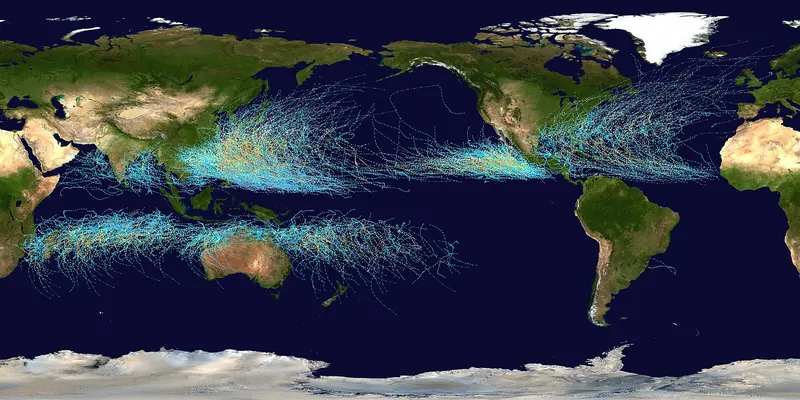
In the northern hemisphere, tropical cyclones happen between June and November, peaking in September. Met Office: Location of tropical cyclones In the southern hemisphere the season lasts from November to April, but storms are less common there than in the northern hemisphere. Met Office: Location of tropical cyclones
Around the Bay of Bengal and the Arabian Sea, tropical cyclones happen from April to December, with a double peak in May and November. NOAA JetStream: Tropical cyclone introduction
Tropical cyclones in the Atlantic region, which affect the Caribbean and USA, usually make up less than 15% of all tropical cyclone activity worldwide. Met Office: Location of tropical cyclones
Busy at once
More than one tropical storm can be going on in the same ocean at once. Met Office: Location of tropical cyclones
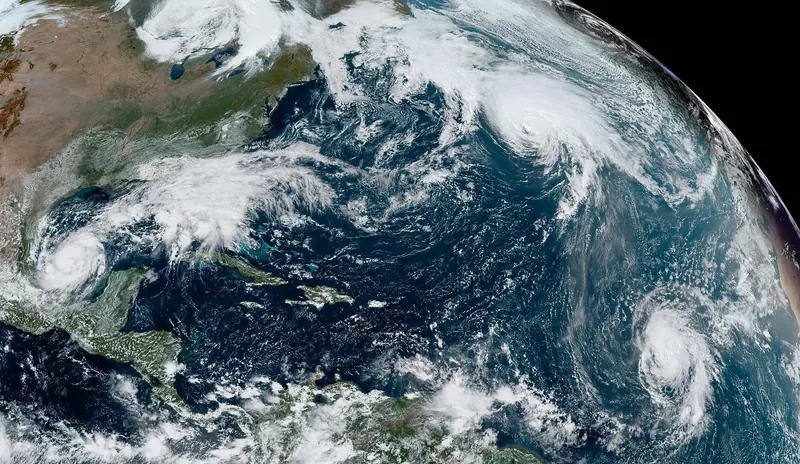
NOAA says the time to prepare is before hurricane season begins: 1 June in the Atlantic and central Pacific, 15 May in the eastern Pacific. NOAA Education: Hurricanes
Next: how storms get names →