Hurricanes, explained.
Hundreds of miles across, powered by warm sea and spinning around a calm eye. Every fact here is checked against the US National Hurricane Center, NOAA, NASA, the Met Office and the World Meteorological Organization. Build your own hurricane, sort storms into categories, and meet Useless, an eraser who has taken up storm-tracking from a desk well inland.
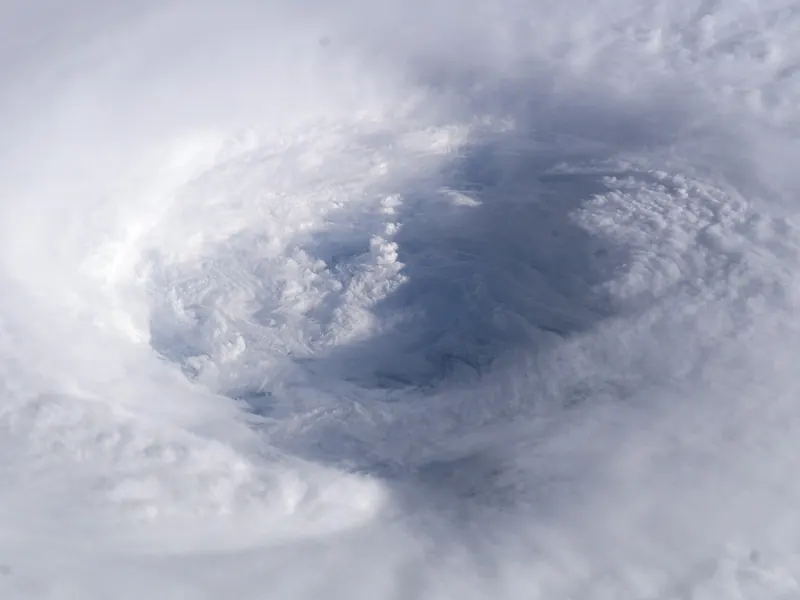
Build a hurricane
Pick the ingredients, then press Brew the storm. Get every one right and your thunderstorms grow into a tropical depression, a tropical storm and then a hurricane. Get one wrong and it fizzles, and you’ll find out why. Then try sending it over land.
Every ingredient comes from NOAA JetStream or the Met Office (sources shown in the game). The storm pictures and the timing are made up by the game: real storms take days, not seconds. A tropical cyclone’s life can be over in as little as 24 hours; others last as long as a month. WMO: Tropical cyclone
The short version
A hurricane is a type of storm called a tropical cyclone, which forms over tropical or subtropical waters. NOAA Ocean Service: What is a hurricane?
Tropical cyclones are like giant engines that use warm, moist air as fuel. That’s why they form only over warm ocean waters near the equator. NASA Space Place: How do hurricanes form?
The Saffir-Simpson Hurricane Wind Scale is a 1 to 5 rating based only on a hurricane’s maximum sustained wind speed. National Hurricane Center: Saffir-Simpson Hurricane Wind Scale Hurricanes rated Category 3 and higher are called major hurricanes. National Hurricane Center: Saffir-Simpson Hurricane Wind Scale
NOAA’s rule: run from the water, hide from the wind. That’s why most evacuation orders are given for water, not wind. NOAA Education: Hurricanes
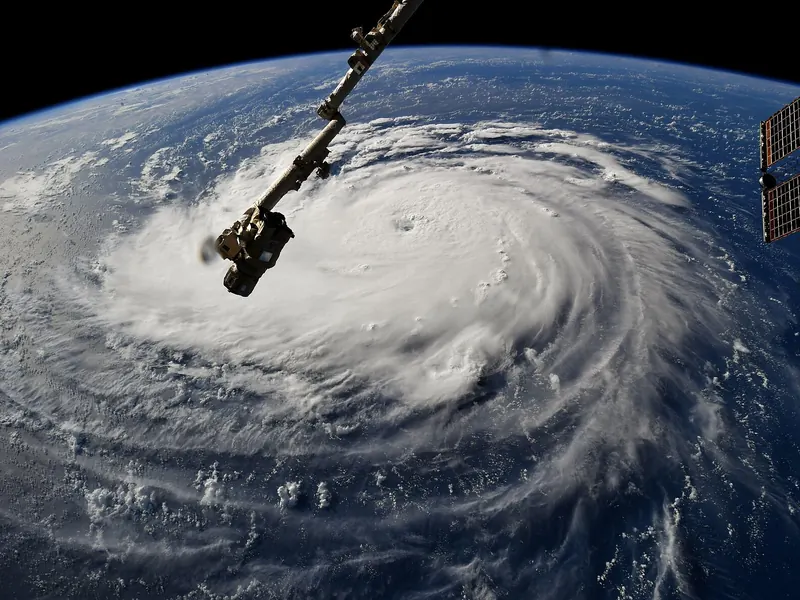
Explore hurricanes
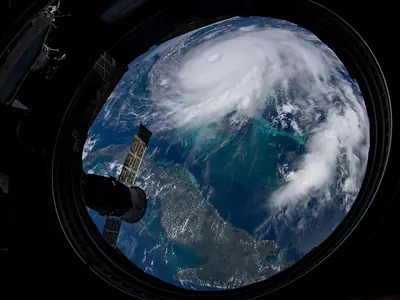 How hurricanes formWarm sea, rising air and six ingredients.
 Inside a hurricaneThe eye, the eyewall and the rainbands.
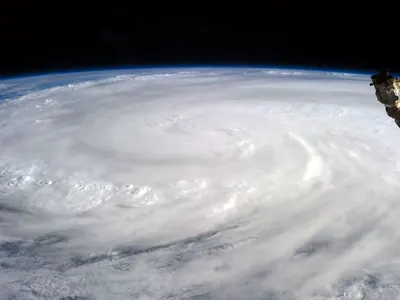 The five categoriesThe Saffir-Simpson scale, from 74 mph up.
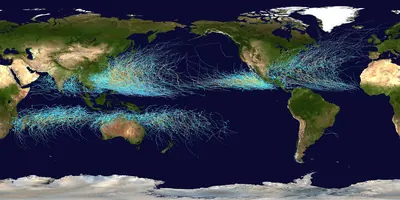 Hurricane seasonWhen and where they happen, worldwide.
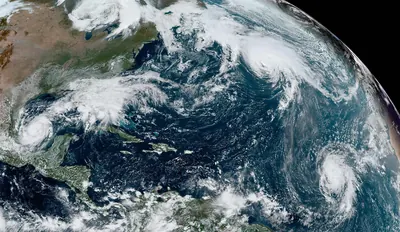 How storms get namesSix lists, retired names and Antje’s hurricane.
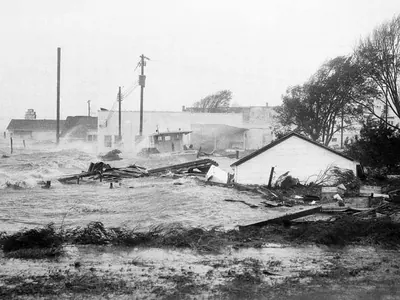 Storm surge & hazardsWhy water, not wind, is the biggest threat.
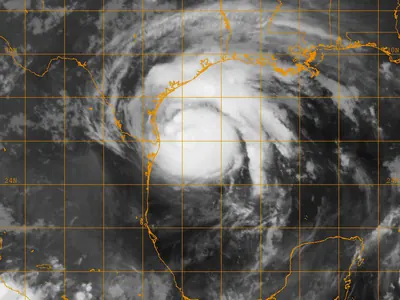 Watches & warningsWhat they mean and what families do.
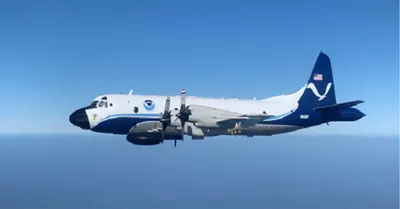 Hurricane HuntersPlanes called Kermit and Miss Piggy.
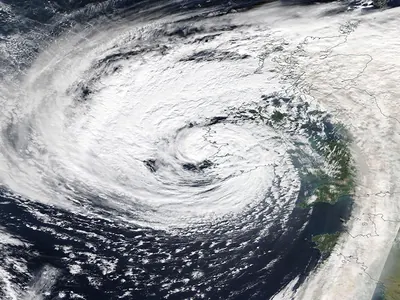 Around the worldTyphoons, cyclones and ex-hurricanes in the UK.
Tile images are credited on their pages and on the credits page.
Things to play
- Build a hurricanePick the six ingredients and watch your storm grow, or fizzle.
- Category CatcherA Hurricane Hunter reads the wind. You name the category before the storm reaches the coast.
- Hurricane Ready DashReal situations, twelve seconds each. Watch or warning? Stay or go?
- Hurricane QuizTen questions at a time. Every answer comes with its source.
- Hurricane PairsA memory game with real NASA and NOAA pictures.
Enjoying the storm? Help keep this site going.
This site is hand-built, fact-checked and free to read. If a fact, a game or one of Useless’s notes made you smile, a little support keeps it going and helps the network grow.
Hurricane printables
Fact-checked PDFs in A4 and US Letter, sold as instant downloads from the ReallyByte store.
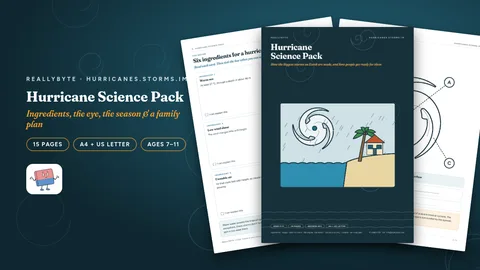
Hurricane Science Pack
How hurricanes form, label the eye and eyewall, the six ingredients, the hurricane season, watch-or-warning sorting and a family be-ready plan, with answer keys
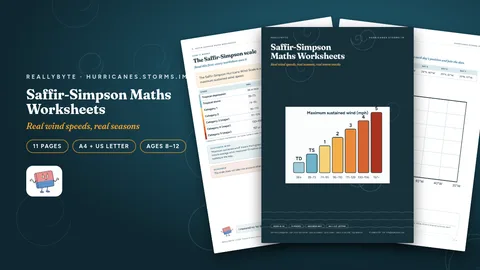
Saffir-Simpson Maths Worksheets
Sort wind speeds into categories, convert mph, km/h and knots, work out season dates and plot a storm track, with answer keys
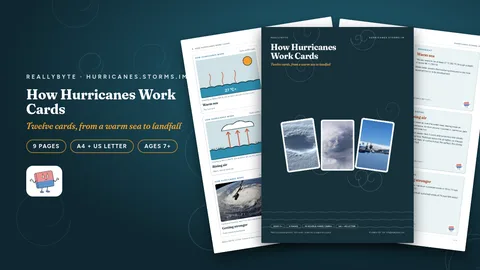
How Hurricanes Work Cards
Twelve double-sided cards, from warm sea to landfall, plus a put-it-in-order game
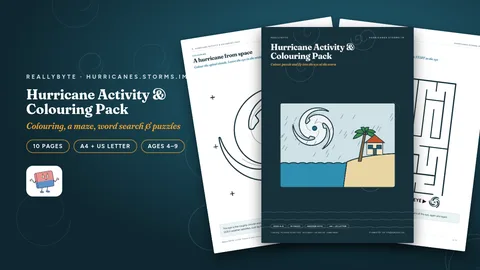
Hurricane Activity & Colouring Pack
Colouring scenes, a Hurricane Hunter maze, a word search and puzzles for ages 4 to 9
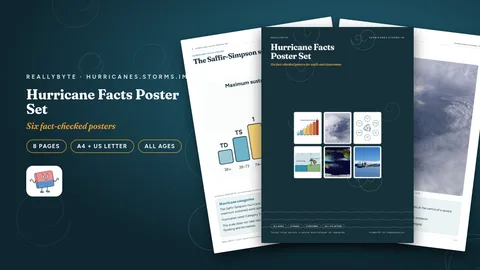
Hurricane Facts Poster Set
Six fact-checked posters, from the Saffir-Simpson scale to the eye of the storm
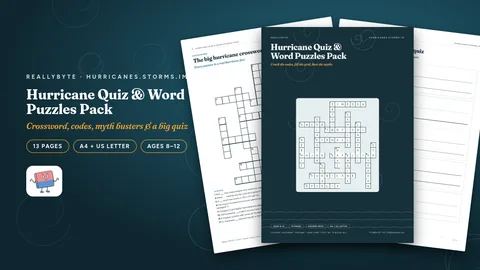
Hurricane Quiz & Word Puzzles Pack
A crossword, code breaker, fill-the-gap facts, number match, myth busters and a 16-question quiz, with answer keys
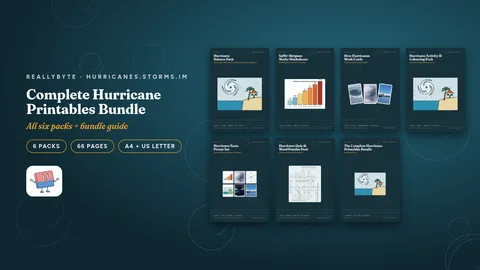 Best value
The Complete Hurricane Printables Bundle
All six packs plus a guide, A4 and US Letter, in one download.