Inside a hurricane
A calm, clear eye, a wall of thunderstorms around it, and bands of rain spiralling in from hundreds of miles away.
The three main parts
The main parts of a tropical cyclone are the rainbands, the eye and the eyewall. NOAA Ocean Service: Hurricane or typhoon?
The eye
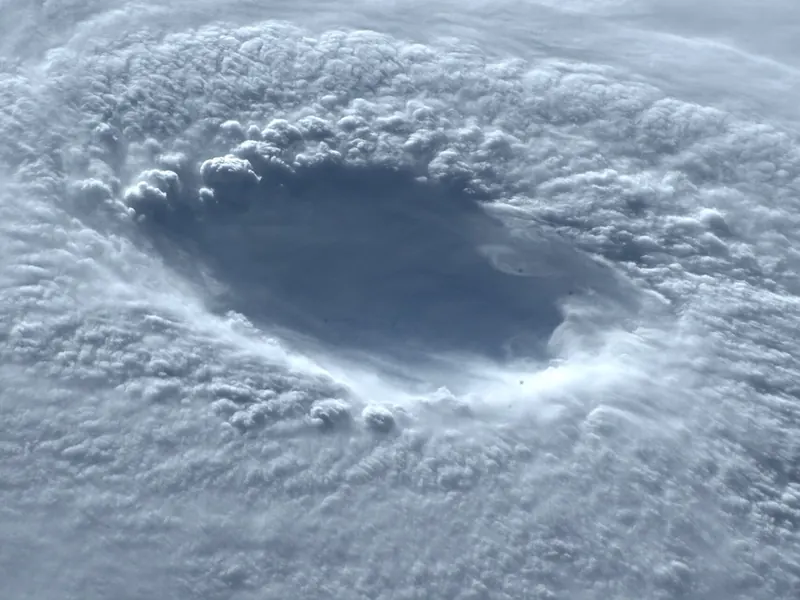
The eye is the roughly circular area of comparatively light winds at the centre of a severe tropical cyclone. National Hurricane Center: Glossary NASA says it is very calm and clear in the eye, with very low air pressure. NASA Space Place: How do hurricanes form?
In the very centre of the storm, air sinks, forming an eye that is mostly cloud-free. NOAA Ocean Service: Hurricane or typhoon?
The eyewall
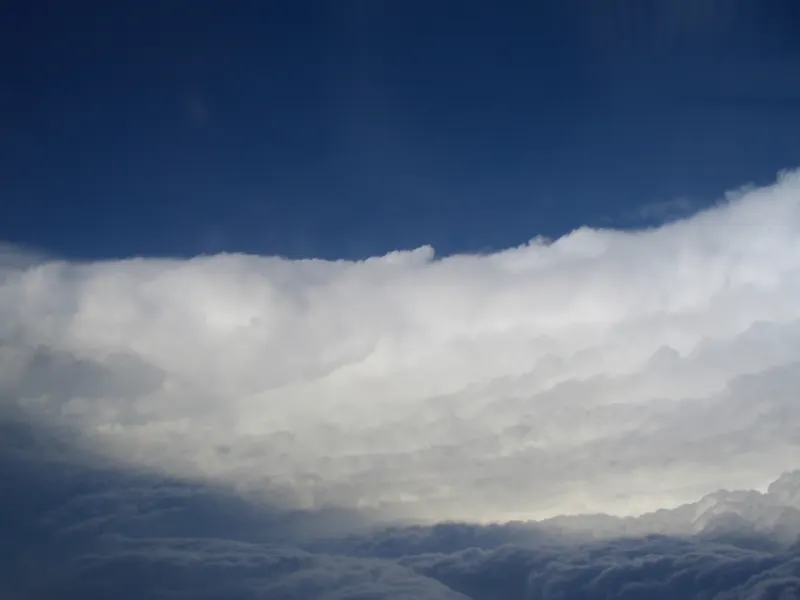
The eyewall is a ring of cumulonimbus (thunderstorm) clouds around the eye. National Hurricane Center: Glossary The eye is surrounded by the eyewall, where the winds are strongest. NOAA Education: Hurricanes
Around the eye there is a fairly small area of intense winds at the surface, often well over 100 mph. Met Office: Development of tropical cyclones
The rainbands
A tropical cyclone has so many cumulonimbus clouds that they form huge, circular bands. NASA Space Place: How do hurricanes form?
Which way does it spin?
Storms north of the equator spin anticlockwise and storms south of the equator spin clockwise, because of Earth’s rotation. NASA Space Place: How do hurricanes form?
Air spirals in towards the centre (anticlockwise in the northern hemisphere, clockwise in the southern) and out of the top in the opposite direction. NOAA Ocean Service: Hurricane or typhoon?
How big?
By the time a tropical cyclone reaches hurricane strength it can be 300 to 500 miles across and up to five to six miles high. Met Office: What are hurricanes?
NASA calls hurricanes the most violent storms on Earth. NASA Space Place: How do hurricanes form?
Landfall
Landfall is when the centre of the storm crosses the coast. The strongest winds can reach land even if the centre doesn’t. National Hurricane Center: Glossary
Next: the five categories →