Storm surge and other hazards
The wind gets the headlines, but water does most of the harm.
Water, not wind, is the biggest threat: historically, well over half of direct deaths from hurricanes landing in the US have come from water. NOAA Education: Hurricanes
NOAA’s rule: run from the water, hide from the wind. That’s why most evacuation orders are given for water, not wind. NOAA Education: Hurricanes
Storm surge
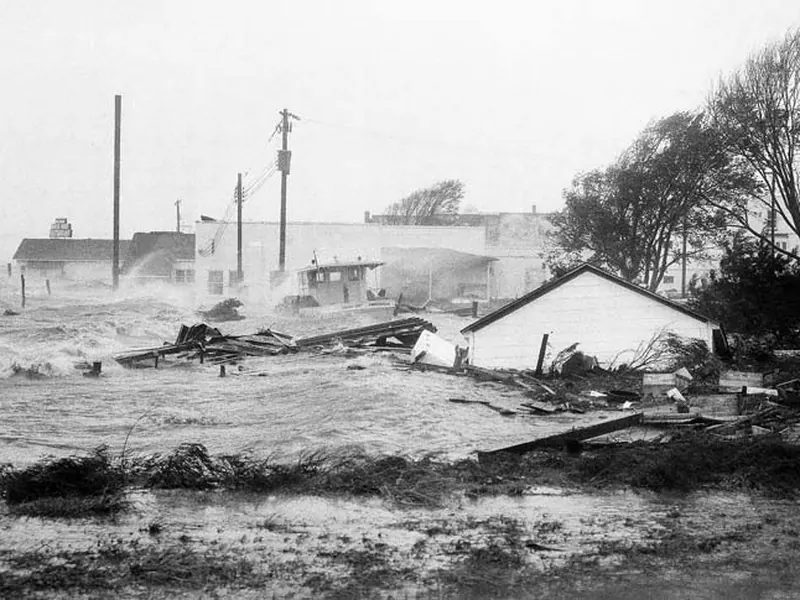
Storm surge is an abnormal rise in sea level generated by a storm, over and above the predicted tide. National Hurricane Center: Storm surge overview The National Hurricane Center says storm surge is currently the leading cause of deaths from hurricanes. National Hurricane Center: Storm surge overview
Storm surge is mainly caused by a hurricane’s strong onshore winds. In deep water there’s no sign of it, but near the coast the sea bed gets in the way and the water is pushed up and inland. National Hurricane Center: Storm surge overview
Storm surge can reach well over 20 feet and span hundreds of miles of coastline. National Hurricane Center: Hurricane hazards Water weighs about 1,700 pounds per cubic yard, so waves pounding again and again can knock down buildings not designed for it. National Hurricane Center: Storm surge overview
What makes a surge bigger?
A larger storm produces a higher surge. National Hurricane Center: Storm surge overview A faster storm makes a higher surge right at the coast; a slower storm pushes the surge farther inland. National Hurricane Center: Storm surge overview
A wide, gently sloping sea floor allows a higher surge. That makes Louisiana and Mississippi especially vulnerable; Florida’s south-east coast, where the shelf drops off quickly, is less so. National Hurricane Center: Storm surge overview
Rain and floods
Tropical cyclones often bring torrential rain of more than 6 inches, and flooding is the major threat for people living inland. National Hurricane Center: Hurricane hazards Flooding from the rain can carry on for days or even weeks after a storm, many miles inland. NOAA Education: Hurricanes
How much rain falls depends on a storm’s speed and size and the land it crosses, not on its strength. Slower, bigger storms bring more rain, and mountains add more. National Hurricane Center: Hurricane hazards
A tropical cyclone can pick up two billion tons of moisture a day and release it as rain. Met Office: Dangers of tropical cyclones
Never drive into flood water. The US National Weather Service slogan is “Turn Around Don’t Drown”. National Hurricane Center: Hurricane hazards
Wind
Even tropical-storm-force winds are dangerous, so emergency managers aim to finish evacuations before they arrive, not just before hurricane-force winds. National Hurricane Center: Hurricane hazards
In a hurricane, debris such as signs, roofing and small items left outside become flying missiles. National Hurricane Center: Hurricane hazards
Winds can stay above hurricane strength well inland: in 2004 Hurricane Charley did major damage across central Florida, with gusts of more than 100 mph. National Hurricane Center: Hurricane hazards
Waves and rip currents
The strong winds can whip up waves up to 15 metres high. Met Office: Dangers of tropical cyclones
Hurricanes can cause dangerous rip currents far from the storm. In 2008 Hurricane Bertha was more than 1,000 miles offshore, yet its rip currents led to 1,500 lifeguard rescues in Ocean City, Maryland, in a week. National Hurricane Center: Hurricane hazards
Tornadoes
Hurricanes can also spin up tornadoes, most often in rain bands well away from the centre. They are usually fairly weak and short-lived. National Hurricane Center: Hurricane hazards
The big picture
A tropical cyclone often brings several hazards at once: extreme winds, heavy rain, storm surge and flooding, lightning and tornadoes. WMO: Tropical cyclone
The WMO says tropical cyclones are the second most dangerous natural hazard, after earthquakes. WMO: Tropical cyclone Over the past 50 years, the WMO counts 1,945 disasters caused by tropical cyclones, with US$1.4 trillion in economic losses. WMO: Tropical cyclone · checked 31 Oct 2026