The Saffir-Simpson categories
One to five, decided by one number: the hurricane’s maximum sustained wind. Here’s what each category means, and what the scale leaves out.
One number
The Saffir-Simpson Hurricane Wind Scale is a 1 to 5 rating based only on a hurricane’s maximum sustained wind speed. National Hurricane Center: Saffir-Simpson Hurricane Wind Scale “Maximum sustained wind” means the highest one-minute average wind, measured 10 metres up with nothing in the way. National Hurricane Center: Glossary
| Stage | mph | km/h | knots | NHC damage words |
|---|---|---|---|---|
| Tropical depression | 38 or less | 62 or less | 33 or less | |
| Tropical storm | 39–73 | 63–118 | 34–63 | Gets a name |
| Category 1 | 74–95 | 119–153 | 64–82 | Some damage |
| Category 2 | 96–110 | 154–177 | 83–95 | Extensive damage |
| Category 3 (major) | 111–129 | 178–208 | 96–112 | Devastating damage |
| Category 4 (major) | 130–156 | 209–251 | 113–136 | Catastrophic damage |
| Category 5 (major) | 157 or more | 252 or more | 137 or more | Catastrophic damage |
What each category does
- Category 1: 74–95 mph (119–153 km/h). Very dangerous winds will produce some damage: roofs, shingles and gutters can be damaged, large branches snap, and power cuts could last a few to several days. National Hurricane Center: Saffir-Simpson Hurricane Wind Scale
- Category 2: 96–110 mph (154–177 km/h). Extremely dangerous winds will cause extensive damage: major roof damage, many shallowly rooted trees snapped or uprooted, and near-total power loss lasting several days to weeks. National Hurricane Center: Saffir-Simpson Hurricane Wind Scale
- Category 3 (major): 111–129 mph (178–208 km/h). Devastating damage will occur. Electricity and water will be unavailable for several days to weeks after the storm passes. National Hurricane Center: Saffir-Simpson Hurricane Wind Scale
- Category 4 (major): 130–156 mph (209–251 km/h). Catastrophic damage will occur. Power cuts will last weeks to possibly months, and most of the area will be uninhabitable for weeks or months. National Hurricane Center: Saffir-Simpson Hurricane Wind Scale
- Category 5 (major): 157 mph (252 km/h) or higher. Catastrophic damage will occur: a high percentage of framed homes will be destroyed. National Hurricane Center: Saffir-Simpson Hurricane Wind Scale
Hurricanes rated Category 3 and higher are called major hurricanes. National Hurricane Center: Saffir-Simpson Hurricane Wind Scale Major hurricanes have winds of at least 111 mph and can reach over 180 mph, with gusts of 200 mph. NOAA Education: Hurricanes
The scale does not take into account other deadly hazards such as storm surge, rainfall flooding and tornadoes. National Hurricane Center: Saffir-Simpson Hurricane Wind Scale
Hurricanes of all categories can produce deadly storm surge, rain-induced floods and tornadoes. National Hurricane Center: Saffir-Simpson Hurricane Wind Scale Categories only tell part of the story: a tropical storm or a Category 1 or 2 hurricane can cause as much overall damage as a major hurricane. NOAA Education: Hurricanes
NASA Space Place’s table gives storm surges of about 4–5 feet for Category 1, rising to 19 feet or more for Category 5. NASA Space Place: How do hurricanes form?
Who made it?
The scale was created by wind engineer Herb Saffir and meteorologist Bob Simpson, to help explain the damage buildings would suffer at different wind speeds. NOAA Education: Hurricanes The Met Office says the scale began in 1971 with Herbert Saffir, a civil engineer, and Bob Simpson of the US National Hurricane Center. Met Office: Measuring tropical cyclones
Although it was developed in the USA, the Met Office says tropical cyclones around the world are measured on the Saffir-Simpson scale. Met Office: Measuring tropical cyclones
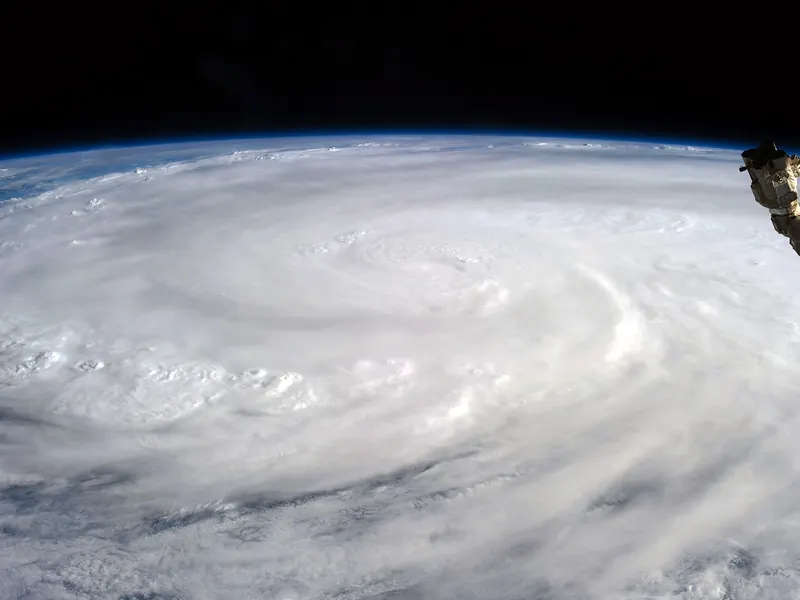
Super typhoons
In the western North Pacific, “super typhoon” is used for tropical cyclones with sustained winds over 150 mph. National Hurricane Center: Saffir-Simpson Hurricane Wind Scale
Next: hurricane season →