Hurricanes, typhoons and cyclones
The same kind of storm goes by different names depending on which ocean it’s in.
Same storm, different names
Hurricanes and typhoons are the same weather phenomenon: tropical cyclones. The only difference is where the storm happens. NOAA Ocean Service: Hurricane or typhoon?
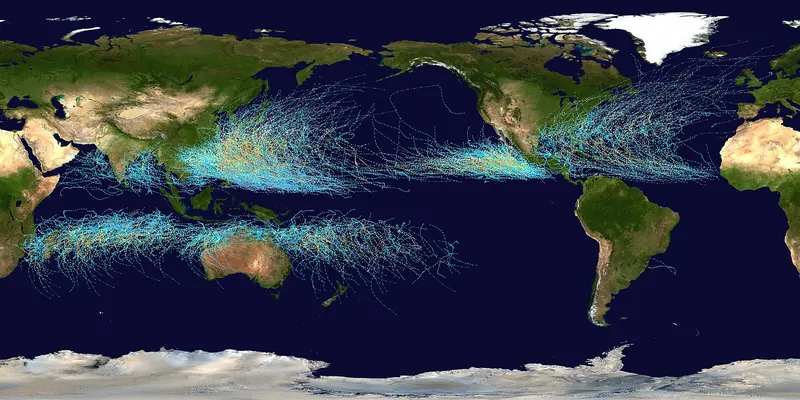
In the North Atlantic, central North Pacific and eastern North Pacific, the word is hurricane. In the north-west Pacific it’s typhoon. In the South Pacific and Indian Ocean, it’s simply tropical cyclone. NOAA Ocean Service: Hurricane or typhoon?
The Met Office’s list of names: hurricane (Atlantic and north-east Pacific), typhoon or super typhoon (north-west Pacific), severe tropical cyclone (south-west Pacific and south-east Indian Ocean), severe cyclonic storm (north Indian Ocean) and tropical cyclone (south-west Indian Ocean). Met Office: Location of tropical cyclones
Where they form
Tropical cyclones form in tropical oceans between about 5° and 30° north or south of the equator, where the sea is at least 27 °C. Met Office: Development of tropical cyclones
Tropical cyclones are rare in the South Atlantic. NOAA Education: Hurricanes
Who they affect
Tropical cyclones most often make landfall in the USA and Asia. Met Office: Location of tropical cyclones
Indian Ocean cyclones can affect India, Bangladesh, north-west Australia, parts of east Africa, and islands such as Mauritius and Madagascar. Met Office: Location of tropical cyclones
Pacific tropical cyclones can affect Mexico, south-east Asia, north-east Australia and the south Pacific islands. Met Office: Location of tropical cyclones
And the UK?
Hurricanes can’t form at the UK’s latitude: they need much warmer seas than those near the UK. Met Office: What are hurricanes?
The UK is sometimes hit by storms that used to be hurricanes, such as ex-Hurricane Ophelia in 2017. Met Office: What are hurricanes?
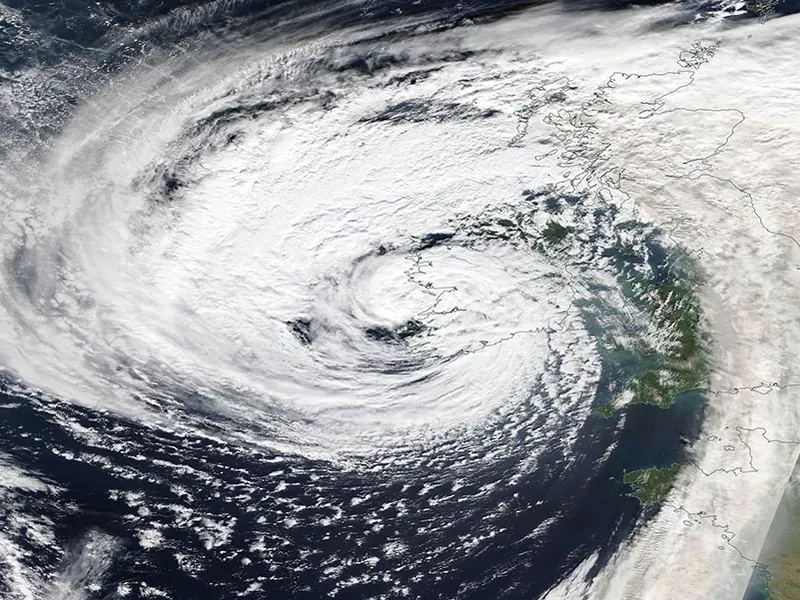
Intense mid-latitude storms can bring near-hurricane-strength winds, like the Great Storm of 16 October 1987. Met Office: What are hurricanes? The Met Office says the most widely publicised near-hurricane-strength storm in the UK was the Great Storm of 16 October 1987. Met Office: What are hurricanes?
Records and history
Tropical cyclone records began in 1886 in the North Atlantic and in 1945 in the western North Pacific. NOAA JetStream: Tropical cyclone introduction
The Galveston hurricane of 1900 was the deadliest weather disaster in United States history. Storm tides of 8 to 15 ft flooded the whole of Galveston Island. National Hurricane Center: Hurricane history About 8,000 people died in the Galveston hurricane (estimates range from 6,000 to 12,000), mostly because of the storm tides. National Hurricane Center: Hurricane history
In the NHC’s table of the most intense US mainland hurricanes (1851–2004), number one is an unnamed 1935 Florida Keys storm: Category 5, with a central pressure of 892 millibars. National Hurricane Center: Most intense US hurricanes 1851–2004 Next on that table come Camille (1969, 909 mb) and Andrew (1992, 922 mb), both Category 5 at landfall. National Hurricane Center: Most intense US hurricanes 1851–2004
On 28 October 2025 the WMO reported that Category 5 Hurricane Melissa had hit Jamaica and other Caribbean islands. WMO: Tropical cyclone · checked 31 Oct 2026
Next: myths vs facts →