How hurricanes form
A hurricane is a heat engine. Warm sea water evaporates, rises, turns back into cloud and lets go of its heat, and that heat drives the wind.
A giant engine
A hurricane is a type of storm called a tropical cyclone, which forms over tropical or subtropical waters. NOAA Ocean Service: What is a hurricane? A tropical cyclone is a rotating, organised system of clouds and thunderstorms that starts over tropical or subtropical waters and has a closed low-level circulation. National Hurricane Center: Tropical cyclone climatology
Tropical cyclones are like giant engines that use warm, moist air as fuel. That’s why they form only over warm ocean waters near the equator. NASA Space Place: How do hurricanes form? Warm water powers the tropical cyclone and is the most important factor in its development. NOAA JetStream: Tropical cyclone introduction
The six ingredients
NOAA JetStream lists what a tropical cyclone needs to form: NOAA JetStream: Tropical cyclone introduction
- The sea needs to be at least 27 °C (80 °F) through a depth of about 46 m (150 ft). NOAA JetStream: Tropical cyclone introduction
- The air must cool fast enough with height to be unstable, so storm clouds can keep growing. NOAA JetStream: Tropical cyclone introduction
- There must be fairly moist air in the middle of the atmosphere, around 4,900 m (16,000 ft) up. NOAA JetStream: Tropical cyclone introduction
- The storm generally needs to be at least 300 miles (480 km) from the equator. NOAA JetStream: Tropical cyclone introduction
- There must already be a disturbance near the surface to get things started. NOAA JetStream: Tropical cyclone introduction
- Vertical wind shear (the change in wind speed with height) must be low: less than about 23 mph (37 km/h). NOAA JetStream: Tropical cyclone introduction
Why not on the equator?
With only the rarest exceptions, these storms don’t form within 5° latitude of the equator, because the Coriolis force that makes them spin is too weak there. NOAA JetStream: Tropical cyclone introduction
A rare exception: Typhoon Vamei formed near Singapore on 27 December 2001, centred at 1.5°N. Its circulation was on both sides of the equator. NOAA JetStream: Tropical cyclone introduction Before Vamei, the lowest latitude on record for a tropical cyclone was 3.3°N, for Typhoon Sarah in 1956. NOAA JetStream: Tropical cyclone introduction
From a ripple to a hurricane
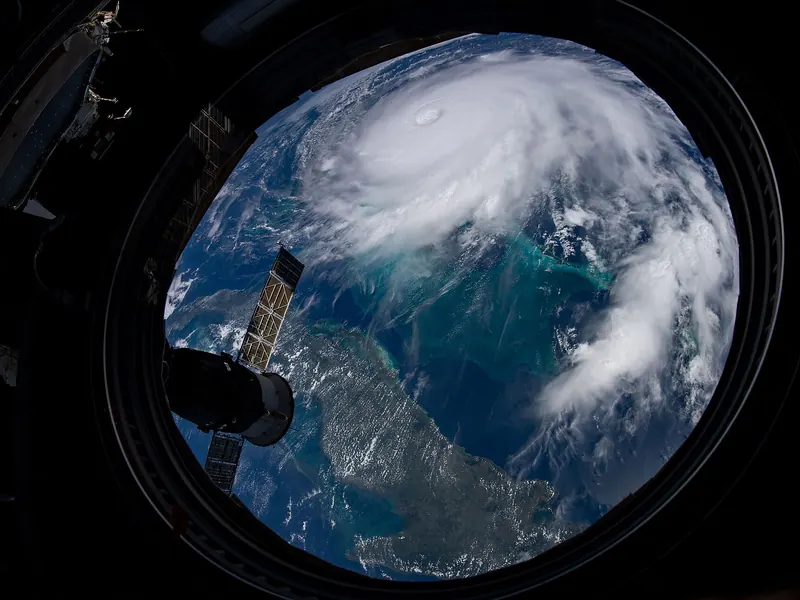
Most tropical cyclones start as easterly waves (also called tropical waves): troughs of low pressure drifting west in the tropical easterly winds. NOAA JetStream: Tropical cyclone introduction A tropical disturbance is a patch of organised thunderstorms, generally 100 to 300 nautical miles across, that holds together for 24 hours or more. National Hurricane Center: Glossary
Warm, moist air over the ocean rises, leaving lower air pressure below. Air from around it pushes in, warms up, gets moist and rises too. NASA Space Place: How do hurricanes form?
As water vapour rises it cools and condenses into clouds, releasing heat. That heat makes the air lighter, so it keeps rising, and more air rushes in near the surface: the strong wind we feel. NOAA JetStream: Tropical cyclone introduction
The growing stages
- Tropical depression: a tropical cyclone with maximum sustained winds of 38 mph (33 knots) or less. National Hurricane Center: Tropical cyclone climatology
- Tropical storm: maximum sustained winds of 39 to 73 mph (34 to 63 knots). National Hurricane Center: Tropical cyclone climatology
- Hurricane: maximum sustained winds of 74 mph (64 knots) or higher. National Hurricane Center: Tropical cyclone climatology
In km/h: a tropical depression has winds of 62 km/h or less, and a tropical storm 63 to 118 km/h. National Hurricane Center: Glossary
How much power?
The energy comes from warm water evaporating from the ocean, and around 90% of that stored energy is released by condensation. Met Office: Development of tropical cyclones
As little as 3% of a tropical cyclone’s heat energy may turn into the energy of its spinning winds. Even that is a power supply of about 1.5 × 10¹² watts: about half the world’s electricity generating capacity. Met Office: Development of tropical cyclones
Why the planet has them
Tropical cyclones move heat from the ocean to the upper atmosphere, where winds carry it towards the poles. This keeps the polar regions from being as cold as they could be, and the tropics a bit cooler. NOAA JetStream: Tropical cyclone introduction
So much of the Sun’s heat in the tropics goes into evaporation and rain that temperatures there rarely go above 35 °C (95 °F). NOAA JetStream: Tropical weather
Where they go, and how they end
Tropical cyclones first move westward, carried by easterly winds, and slightly towards the poles. Met Office: Location of tropical cyclones When Atlantic tropical cyclones reach latitudes near 30°N, they often turn north-east. National Hurricane Center: Tropical cyclone climatology
An average tropical cyclone can travel about 300 to 400 miles a day, or about 3,000 miles before it dies out. Met Office: Location of tropical cyclones As it moves towards the poles it speeds up, and may reach 30 mph or more. Met Office: Location of tropical cyclones
Over land a hurricane usually weakens, because it is no longer being fed by energy from warm ocean water. NASA Space Place: How do hurricanes form? NOAA says that once the eye moves over land the storm weakens rapidly, not because of friction, but because it has lost the moisture and heat the ocean provided. NOAA JetStream: Tropical cyclone introduction
Rarely, the “brown ocean effect” lets a storm keep or even gain strength inland. The ground must be very warm and very wet, so the land mimics the sea. Met Office: Brown ocean effect Tropical Storm Bill, which formed on 16 June 2015, was boosted this way and dropped huge amounts of rain on Texas and Oklahoma. Met Office: Brown ocean effect
If a tropical cyclone travels towards the poles, it can turn into an extratropical (post-tropical) storm. Met Office: What are hurricanes? A tropical cyclone’s life can be over in as little as 24 hours; others last as long as a month. WMO: Tropical cyclone
Could we stop one?
People have suggested “seeding” hurricanes with chemicals, or even using nuclear weapons. NOAA says these ideas vastly underestimate the energy the storms release, and weakening them would mean the oceans keep more heat. NOAA JetStream: Tropical cyclone introduction
Next: inside a hurricane →